

Operational cost escalation, staffing shortages, payor complexity and reimbursement pressures have been and will continue to put a strain on healthcare organizations in all parts of Tennessee. Regardless of whether they’re handling patients in Nashville, Memphis, Knoxville, or a smaller community, healthcare organisations are being faced with ever more complex billing and reimbursement requirements to maintain profitability. Implementing good Revenue Cycle Management (RCM) is essential to lowering denials, enhancing collections, and driving future growth.
Why Revenue Cycle Management is more important than ever in Tennessee
Administrative demands, increasingly demanding payer mandates and escalating operating costs are all challenges healthcare practices are dealing with today. Meanwhile, reimbursement rates are again under pressure. In this tight-knit healthcare market, a well-oiled revenue cycle management engine can optimize practices’ cash flow, reduce billing errors, and maintain financial health.
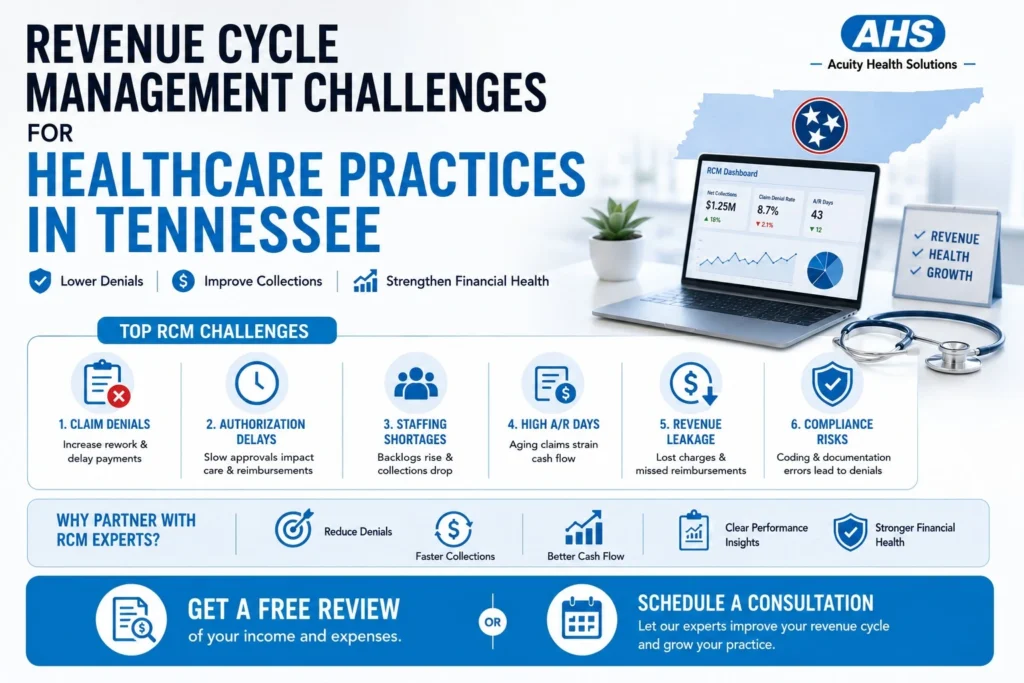
Challenge #1: Growing number of claim denials by payers in Tennessee
Any health plan would tell you that the top revenue issue continues to be claim denials. Most of these are erroneous due to eligibility verification errors, authorizations, coding discrepancies, and lack of documentation. Every challenged claim consumes administrative resources and prolongs payment.
Practices can optimize rejections and revenue loss at checkout, along with effective denial management through dedicated Revenue Cycle Management Services.
Challenge #2 — Prior Authorization Delays That Slow Reimbursements
Prior authorizations for procedures, diagnostics, and speciality services are growing more stringent in the insurance company world. Approval delays may cause delays in patient care, scheduling problems and affect reimbursement timelines.
Tennessee providers typically have to deal with different authorization needs among commercial payers and Medicare Advantage plans.
Challenge # 3 — Effects of Staffing Shortages on the Revenue Cycle Operations
Hiring and retaining quality billing staff has become a challenging task for many healthcare organizations. With staff levels at a shortage, claims become overdue, follow ups delayed and billing backlogs rise, which in turn affects collections and revenue cycle performance adversely.
Challenge #4: Cut down on your A/R days
Increasing A/R days can be an indication that follow-up and denial processing are not very efficient. Cash flow issues are common for ageing claims and unpaid balances in our practices.
Challenge #5 – Revenue Leakage from revenue billing processes
It is estimated that many practices are losing money without knowing it. Revenue leakage is due to missed charges, undercharges, undocumented denials, and poor tracking systems. Adopting strategies to Reduce Claim Denials and track reimbursement performance can make a huge difference in collections.
Challenge #6 – Rural vs Urban Healthcare Revenue Cycle Differences in Tennessee
In most cases, there are more technology and Medical Billing resources available to healthcare organizations in Nashville and Memphis. Revenue cycle management (RCM) can be more difficult for rural providers due to staffing shortages, budget restrictions and limited administration resources.
Challenge #7 – Coding and Documentation Compliance Risks
Correct coding and comprehensive documentation are key to winning reimbursements. Documentation deficiencies and coding errors can result in denials, underpayments, compliance issues, and more. Specialized Clinical Coding Services can enhance billing accuracy and minimize risk.
Challenge #8 – Lack of visibility in the revenue cycle performance
There is little indication that reporting systems are established in many practices for the monitoring of financial performance. Denial rate, clean claim rate, net collection rate and A/R days are all key metrics that show how well the revenue cycle is working out and that will help you find areas to improve.
When Should You Consider an Outsourced RCM Support for a Tennessee Practice?
A rising number of denials and staffing issues, growing A/R balances, and inconsistent collections are signs that practices may need support from an Outsourced Medical Billing Service. Outsourcing brings a wealth of specialized expertise, advanced reporting and a revenue cycle team.
Acuity Health Solutions has facilitated healthcare practices in Tennessee with its services.
Acuity Health Solutions assists providers in Tennessee with the following revenue cycle audit services: Revenue cycle assessment, denial management, coding services, A/R recovery and reimbursement optimization. Through our custom solutions, practices can boost visibility, collection rates and financial performance.
Conclusion
Healthcare providers in Tennessee are still facing revenue cycle management issues. Denied claims, authorization delays, staffing shortages, and hidden revenue leakage can have a tremendous effect on profitability. With billing being improved, denial management optimized, and performance proactively monitored, practices can augment collections and ensure financial stability.
Is Your Tennessee Practice Losing Revenue Without Realizing It?
Get a Revenue Cycle Assessment so you can figure out how to reduce denials, boost collections and boost the bottom line of your practice.