Payer Enrollment Checklist for a New Medical Practice
A complete payer enrollment checklist for new practices, from entity and provider readiness through CAQH, PECOS, contracts, effective dates, ERA/EFT, and first claims.


Healthcare compliance is no longer a once-a-year audit exercise. In 2026, medical practices face tighter CMS scrutiny, evolving HIPAA enforcement,...

Tele-behavioral health has become a preferred mode of care delivery for many mental health practices. Patients benefit from accessibility, while...

Healthcare Compliance continues to evolve rapidly, and 2026 brings several important regulatory, documentation, and billing-related changes that medical practices cannot...

Behavioral Health Practices have adopted telehealth in the last several years- yet much of the billing problems are well beyond...

The tracking of payments is essential in ensuring a healthy revenue cycle. Nevertheless, there are a large number of healthcare...

Behavioral health practices are more prone to reimbursement issues compared to other ...

Operational cost escalation, staffing shortages, payor complexity and reimbursement pressures have been and will continue to put a strain on...

Many healthcare providers don’t want to change their Revenue Cycle Management (RCM) partner due to cost – they change due...

Unique financial issues are posed by plastic surgery practices as patients may be charged for reconstructive surgeries as well as...

Behavioral Health Billing calls for particular information and specialized expertise beyond the scope of typical medical billing. Each payer has...

A complete payer enrollment checklist for new practices, from entity and provider readiness through CAQH, PECOS, contracts, effective dates, ERA/EFT, and first claims.
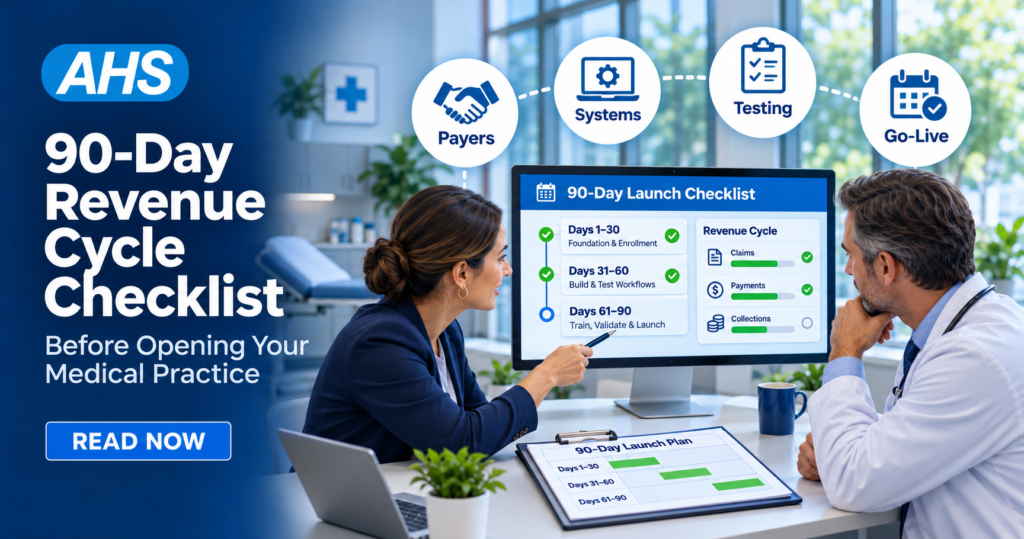
A week-by-week revenue cycle checklist for the 90 days before a medical practice opens, covering payers, systems, workflows, testing, payments, and go-live controls.

Compare medical billing software, outsourced billing, and hybrid models for a new practice across cost, staffing, control, compliance, technology, and cash-flow risk.