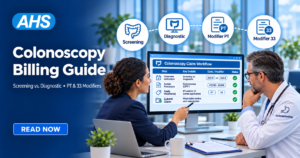

Screening and diagnostic colonoscopies can use the same procedure family, but the claim must preserve why the exam began, what was actually performed, and which payer rules apply. When a screening exam becomes diagnostic or therapeutic, the code, modifier, diagnosis order, and patient-cost-sharing treatment can all change. A disciplined pre-bill review prevents denials and unexpected patient balances.
This guide gives GI practices a practical workflow for screening, diagnostic, and converted colonoscopy claims. It is operational guidance, not a substitute for current CPT, CMS, or payer policy. Verify each payer’s requirements before submission.
Screening vs. diagnostic colonoscopy: the quick distinction
| Scenario | Billing focus | Key review |
|---|---|---|
| Preventive screening | Average-risk or high-risk screening benefit | Confirm eligibility, screening interval, diagnosis, and payer-specific code |
| Diagnostic colonoscopy | Symptoms, abnormal findings, or disease surveillance | Document the diagnostic indication and code the service performed |
| Screening converts during the exam | Biopsy, polypectomy, or other therapeutic work | Report the procedure performed and apply the payer’s conversion rules |
When modifier PT or modifier 33 may apply
For Medicare claims, modifier PT identifies a colorectal cancer screening test that became diagnostic or therapeutic during the same encounter. For eligible preventive services billed to many commercial plans, modifier 33 may identify the preventive origin of the service. These modifiers are not interchangeable, and payer instructions can differ.
- Do not bill a screening G-code and a therapeutic colonoscopy code as separate same-session procedures when one encounter converted.
- Report the code that describes the most extensive service actually performed.
- Preserve the original screening indication and sequence diagnoses according to the payer’s policy.
- Confirm whether PT, 33, KX, or a discontinued-procedure modifier is required for the exact payer and setting.
A five-step colonoscopy billing workflow
- Verify benefits before the procedure. Confirm screening eligibility, frequency limits, prior authorization, network status, and patient responsibility.
- Capture the original indication. Distinguish preventive screening from symptoms, abnormal tests, surveillance, or active disease.
- Reconcile the operative note. Confirm the extent reached, techniques performed, lesions treated, pathology orders, and whether the exam was discontinued.
- Apply payer-specific coding. Select the procedure code, modifier, and diagnosis sequence that match the encounter and current payer policy.
- Run a patient-balance safeguard. Review claims that converted from screening before statements are released so preventable cost-sharing errors do not reach the patient.
Common denial and patient-billing traps
- Missing PT or 33 when a screening exam becomes therapeutic
- Using a screening code even though symptoms made the exam diagnostic from the start
- Incorrect diagnosis ordering after a polyp or lesion is found
- Duplicate reporting of the screening exam and the therapeutic service
- Mismatch between physician and facility claims for discontinued procedures
- Releasing a patient statement before the payer processes the preventive benefit correctly
Build the review into the GI revenue cycle
A strong process connects scheduling, eligibility, the endoscopy report, coding, claim edits, remittance review, and patient statements. Track denials and appeals by payer, procedure, modifier, and root cause. That turns isolated rework into a repeatable prevention program.
Acuity Health Solutions provides gastroenterology medical billing and RCM support for GI practices that need specialty-aware coding, denial prevention, A/R follow-up, and reporting.