

The term Revenue Cycle Management (RCM) is commonplace in the healthcare industry, but most people think of Medical Billing when they hear it. Essentially, a Revenue Cycle Management company manages the entire financial nature of a patient encounter — from scheduling to final payment collection. Prioritization of effective RCM has surged due to increased reimbursement pressures, staff shortages, payor complexities and expenses.
Definition – Revenue Cycle Management (RCM)
Revenue Cycle Management (RCM) is the entire process of managing all financial processes related to patient care. The patient experience begins before the actual visit and lasts until the provider is reimbursed 100%.
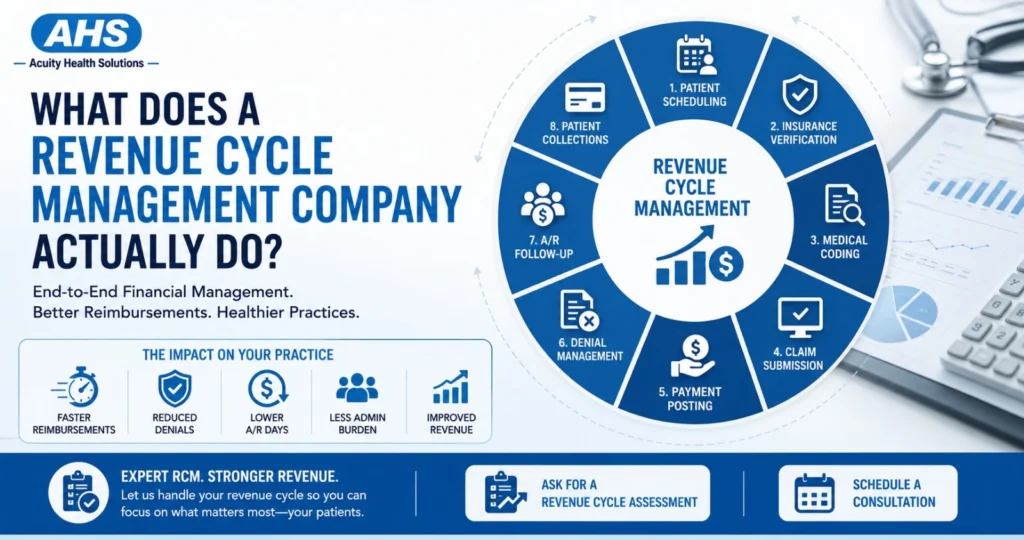
Here are the traditional processes of revenue cycle:
Patient Scheduling→ Insurance Verification→ Medical Coding→ Claim Submission → Payment Posting →Denial Management →Accounts Receivable Follow-Up→Patient Collections
Effective management at each step translates to fewer denials, faster reimbursements, and improved practice finances.
Roles Performed By A Revenue Cycle Management Company
An RCM company is an extension of your practice financial operations team. It not only handles claims, but a number of processes that directly impact revenue.
Patient Eligibility Verification
Before the patient visits, RCM specialists check that a patient’s insurance is in order and benefits have been approved together with eligibility and authorization requirements. This minimizes claim denials due to erroneous or missing insurance information, or lack of prior approvals.
Medical Coding & Charge Capture
The RCM teams do accurate coding of CPT and ICD-10 code and also review the medical documents. Impact of Good Coding Effective coding can reduce the risk of audits, increase revenue capture, and produce a clean claim submission process.
Learn More -: Clinical Coding Services
Claim Submission & Billing
After coding has taken place, claims are then prepared, scrubbed and filed electronically. A well-optimized claims management process results in an improvement in first pass acceptance rates while also eliminating the need for any follow-up on a claim.
Denial Management
You investigate denials to determine the reasons. Professionals in RCM handle appeals, corrections, and resubmissions that help recover lost revenue. Denial management plays a role in optimizing collections.
Payment Posting & Reconciliation
These are sent on receipt of payments to be posted in comparison with claims. Helps you identify underpayments, payment discrepancies and missing reimbursements and brings more visibility into your financials.
Learn More -: ERA and EFT in Medical Billing
Follow-ups for Accounts Receivable (A/R)
Claims must be followed up with insurance companies when they are outstanding. RCM businesses keep an eye on old accounts, settle late payments and do everything in their power to lower A/R days and get cash flowing.
Patient Billing & Collections
RCM firms also handle patient statements, payment reminders, collection support and patient payment plans to increase the amount of revenue collected due to an increasing financial responsibility on the patient’s part.
How an RCM Company Impacts Practice Revenue
It is measurable and tangible that a strong Revenue Cycle Management partner provides financial benefits:
- Shorter Reimbursement Times: Cleaner claims are paid sooner, allowing you to get the reimbursements you need faster.
- Reduced Denial Rate: Errors are caught prior to submission.
- Quicker Cash Collections: Faster collections lead to improved financial security.
- Improve compliance: Fewer coding and billing issues.
- Less Administrative Burden: Time spent with patients instead of on administrative paperwork.
- Enhanced Financial Transparency: With extensive reporting, leaders make data-driven decisions.
Alerts of RCM Company Your Practice May Soon Need
You must think about RCM support if your organization has one of the following:
✔ Rising claim denials
✔ Increasing A/R days
✔ Delayed reimbursements
✔ Frequent coding errors
✔ Revenue performance uncertainty
✔ Patient collection difficulties
✔ Growth-related operational strain
They could be indications of more significant revenue cycle issues that require a specialist.
Looking for Some Help with the Revenue Cycle?
From claim denials and time consuming reimbursements to increasing A/R days and billing inefficiencies, Acuity Health Solutions offers comprehensive Revenue Cycle Management solutions to ensure better financial performance, higher efficiency and better operational performance.