
One of the biggest revenue problems facing Ophthalmology Practices in 2026 is the delay in prior authorization. Many eye care practices rely on timely insurance approvals for surgeries, injections, diagnostics and specialty procedures. Slow reimbursements, scheduling conflicts, denials of claims and patient complaints are some regular consequences for tardy approvals.
With more of an emphasis on documentation, even minute errors in authorizations can result in significant financial delays as payer requirements evolve. Since both ophthalmology claims denials and billing are very specific, it is best to use proposed Ophthalmology Billing Services (aka eye care billing); your practice might face several workflow efficiency challenges.
What is Prior Authorization in eyehealth?
Prior authorization is the act of obtaining approval from an insurance company before performing certain ophthalmology procedures or treatments.
Here are some examples of services that typically need to be authorized:
- Cataract procedures
- Botox/Xeomin treatments
- Eyelid surgeries
- Retina injections
- Imaging and diagnostics
Since the billing processes vary between insurance payers with different prerequisites for authorization, the area of ophthalmology practices is more cumbersome.
Other clinics that provide Botox and Xeomin (Botox for aesthetics) services have other documentation needs and payer reviews that they must handle.
The Hidden Revenue Effect of Authorisation Delays
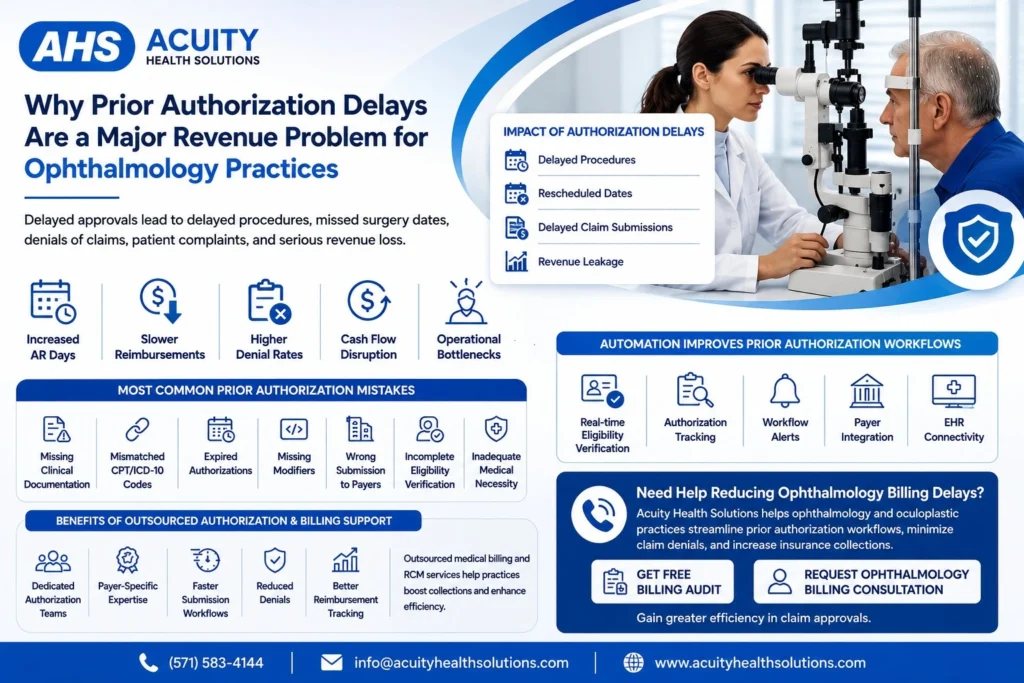
The time it takes to get authorization can cause major financial and operational issues for ophthalmology practices. Delayed approvals can cause delayed procedures, missed surgery dates, rescheduled dates and delayed claim submissions.
Typically, such delays lead to:
- Increased AR days
- Slower reimbursements
- Higher denial rates
- Cash flow disruption
- Revenue leakage
For instance, delayed authorization for the retina injection could delay Reimbursement for a few weeks, impacting the monthly collections and financial health of the practice. Improving insurance collections in practices is a practice that involves a lot of work on authorizing workflows.
Most Common Prior Authorization Mistakes That Lead to Delays
There are many Medical Billing and documentation errors that can be prevented that lead to authorization issues in ophthalmology.
Common issues include:
- Missing clinical documentation
- Mismatched CPT/ICD-10 Code Matching
- Expired authorizations
- Missing modifiers
- Wrong submission to the payer(s)
- Inadequate medical necessity assistance
- Incomplete eligibility verification
Effective eligibility verification best practices and documentation workflows can help minimize delays in authorization.
How Authorization Errors Trigger Ophthalmology Claim Denials
Denial of ophthalmology claims is often due to authorization-related billing errors. Typical denials can be missing approvals, expired approvals, payer mismatch or incorrect procedure approvals.
These denials are frequently accompanied by:
- Appeals
- Claim corrections
- Resubmissions
- Manual payer follow-up
Denial Management will not be proactive, and practices could see a rise in reimbursement delays as well as administrative burden. In fact, many clinics now have more robust denial management policies in place to enhance their collections efforts.
Why Prior Authorization Creates Operational Bottlenecks
Another aspect of authorization management that is challenging for ophthalmology practices is its distribution. Another issue with authorization management that is difficult for ophthalmology practices is distribution.
Staff can end up spending hours on hold with insurance companies, booking surgeries, coordinating with payers, etc. and tracking whether these have been approved or not.
This leads to:
- Front-desk burden
- Staff burnout
- Scheduling disruptions
- Increased administrative workload
Using Automation to Improve Prior Authorization Workflows
Ophthalmology practices are leveraging automation solutions to streamline the authorization process and minimize reimbursement delays.
In today’s world, modern billing technology can help:
- Real-time eligibility verification
- Authorization tracking
- Workflow alerts
- Payer integration
- EHR connectivity
Eligibility check and prior authorization practices that incorporate automation tend to have fewer delayed approvals and quicker reimbursement cycles.
Many ophthalmology practices decide to outsource authorization & billing support, which is understandable and explained here.
The reimbursement performance optimization and administrative burden reduction are driving the growth of billing and authorization outsourcing by many ophthalmology practices.
Some advantages of outsourced support are:
- Dedicated authorization teams
- Payer-specific expertise
- Faster submission workflows
- Reduced denials
- Better reimbursement tracking
Outsourced Medical Billing Services and revenue cycle management services help practices boost collections and enhance their efficiency.
Need Help Reducing Ophthalmology Billing Delays?
Acuity Health Solutions provides ophthalmology and oculoplastic practices with solutions to improve prior authorization workflows, minimize claim denials and increase insurance collections.