
The compliance of Medicare Billing remains dynamic, and by 2026, it is likely to be subject to further review on the accuracy of documentation, the integrity of coding, and the prevention of fraud. In the context of medical practices, timely compliance is not merely a regulatory issue but can be a key determinant in safeguarding reimbursement and preventing audits, fines, or payment delays.
This checklist defines the critical practices in Medicare billing that practices should consider to comply with the standards in 2026.
Verify Provider Enrollment and Revalidation Status
The outdated or incomplete provider enrollment is one of the most disregarded compliance risks. The physicians, non-physician practitioners, and facilities are to ensure active enrolment in Medicare and revalidation within the stipulated time limits.
Otherwise, denial of a claim, payment suspension, or retroactive withdrawal may occur. Practices are expected to check the accuracy of the National Provider Identifier (NPI) regularly, reassignment agreements, and location details of the practice.
👉 Medical Billing In Tennessess
Confirm Accurate Patient Eligibility and Coverage
Eligibility mistakes are the most frequent source of Medicare reimbursement denials. Services are to be rendered after practices ensure the existence of Medicare Part A or Part B coverage, secondary payer status, and coordination of benefits before services are rendered.
It is imperative to review the rules of the Medicare Advantage plans separately since they do not apply the same authorization and Medical Billing rules as traditional Medicare.
Validate Documentation and Medical Necessity
Medicare has to be well-documented in regard to medical necessity. Clinical notes should indicate how services were reasonable and necessary, and conform to diagnosis codes and the level of service billed.
Practices in 2026 must be keen on documentation with high-risk services like infusion therapy, durable medical equipment, and evaluation and management (E/M) services.
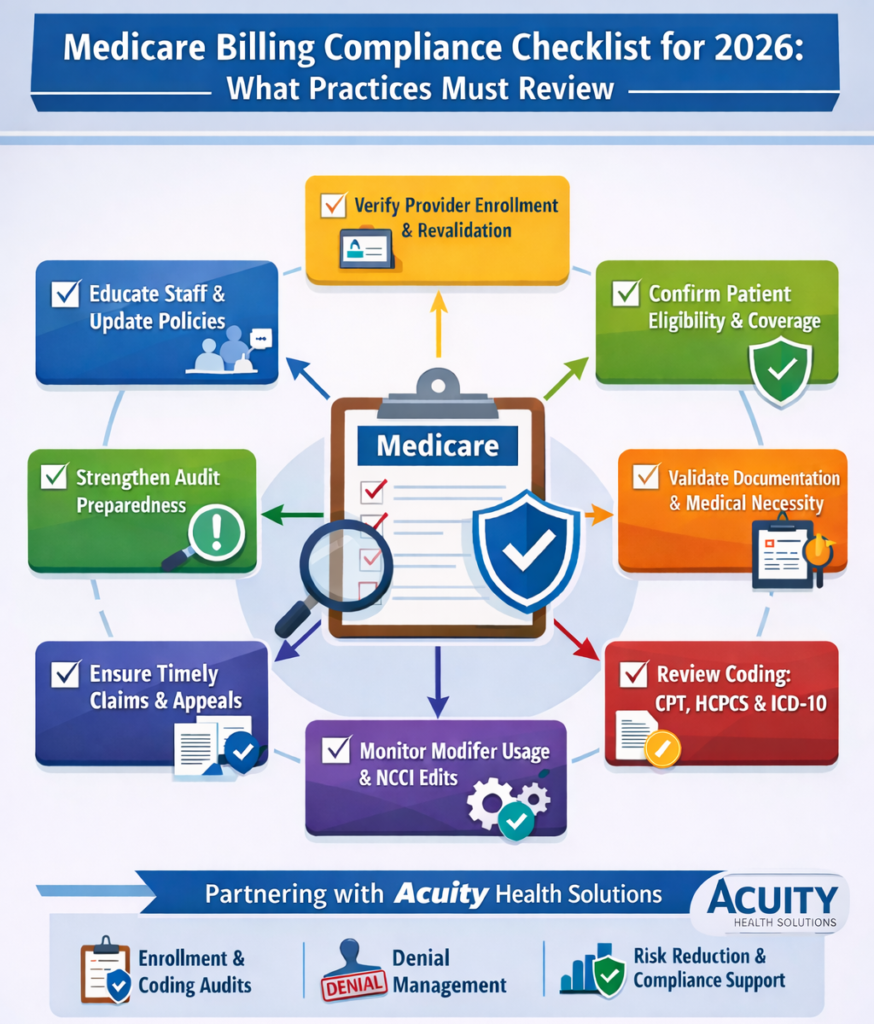
Review CPT, HCPCS, and ICD-10 Coding Accuracy
Medicare compliance is based on accurate coding. CPT and HCPCS codes and ICD-10 should be audited on a regular basis to ensure that they are reflective of the services delivered and that they comply with the existing Medicare requirements.
Code sets should be updated every year in time. The misuse of modifiers, unbundling, or the old codes also poses a greater audit risk.
Monitor Modifier Usage and NCCI Edits
Medicare auditors often examine such modifiers as -25, -59, -26, and -TC. The use of modifiers should be documented and should be in conforming with National Correct Coding Initiative (NCCI) edits.
Internal reviews are done regularly to be able to see patterns that might lead to audits.
Ensure Timely Claim Submission and Appeals
Medicare has rigid filing deadlines. Appeals should be made according to specific timelines, and claims have to be made within one calendar year of the service.
The practices should keep track of the dates of submissions, remittance advice, and status of appeals to avoid loss of revenue because of missed deadlines.
Strengthen Audit Preparedness and Risk Monitoring
RACs, MACs, and other contractors are increasing in the number of Medicare audits. Practices must keep a record of the practices, conduct internal compliance audits, and follow the trend of denials.
Risk assessments can be done proactively to determine the vulnerabilities before they become a formal audit.
Educate Staff and Update Compliance Policies
Continuous employee training is a prerequisite for compliance. The front-end, Clinical Coding, and Billing teams should remain updated regarding changes in Medicare rules, documentation standards, and payer-related policies.
New compliance documents and well-defined escalation procedures minimize errors and facilitate stable work processes.
How Acuity Health Solutions Supports Medicare Compliance
Acuity Health Solutions is a partner with the practices that enhance compliance with Medicare by enrolling them, conducting coding audits, denial prevention, and payer-aligned workflow.
The compliance checks encompass the entire revenue cycle, which allows the practices to minimize risk, enhance the accuracy of claims, and remain financially stable with the help of Acuity.
Final Thoughts
In 2026, the compliance of Medicare billing should be vigilant, structured, and constantly improving. With a fully-fledged compliance checklist, the practices can ensure that they detect gaps, minimize audit exposure, and protect revenue in a more regulated setting.