

Revenue loss in the Medical Billing itself is very common and most of the clinics hardly realize. Problems with billing can result in between 10–20% revenue loss even for well established practices. Everything from coding errors to slow follow-up can quickly accumulate and cause considerable financial loss.
The first step towards a strong and profitable revenue cycle is understanding the leaks in your system that are preventing you from maximising revenue.
Inaccurate Medical Coding
Wrong coding is one of the biggest reasons for Revenue loss. Inaccurate CPT, ICD-10 or HCPCS codes can lead to claim rejections or underpayments. Even small errors can result in payment reductions or compliance exposure, like missing modifiers/incorrect diagnosis codes.
This is where the importance of certified coders and frequent audits come in to keep the coding accurate and ensure compliance with payers guidelines.
Poor Documentation
Claims are submitted based on clinical documentation (CD) and hence incomplete or lack of clarity leads to claim denial. Insurance companies need comprehensive and precise documentation to prove med necessity. Lack of documentation often results in either denials or delays.
Clinics without audit-ready documentation are at a high risk of payment and compliance-related issues.
Inefficient Denial Management
Not every denied claim is lost revenue—but failing to follow up on them is. This can lead to many clinics missing opportunities to get their pay back, simply because they do not follow an organized process for handling denials.
Common issues include:
- Not tracking denied claims properly
- Delayed resubmissions
- Lack of root cause analysis
- Handling denials can have a huge impact on collections.
Eligibility and Authorization Errors
One of the potential causes for Claim Denials is failure to confirm patient eligibility and secure prior authorization. If the insurance is not verified and services are rendered, the clinic ends up receiving no payment at all.
With front-end errors like these, promise has to withstand scrutiny rather than the other way about — benefited by a manageable backlog but often neglected to the cost of revenue leakage that can be 100% preventable.
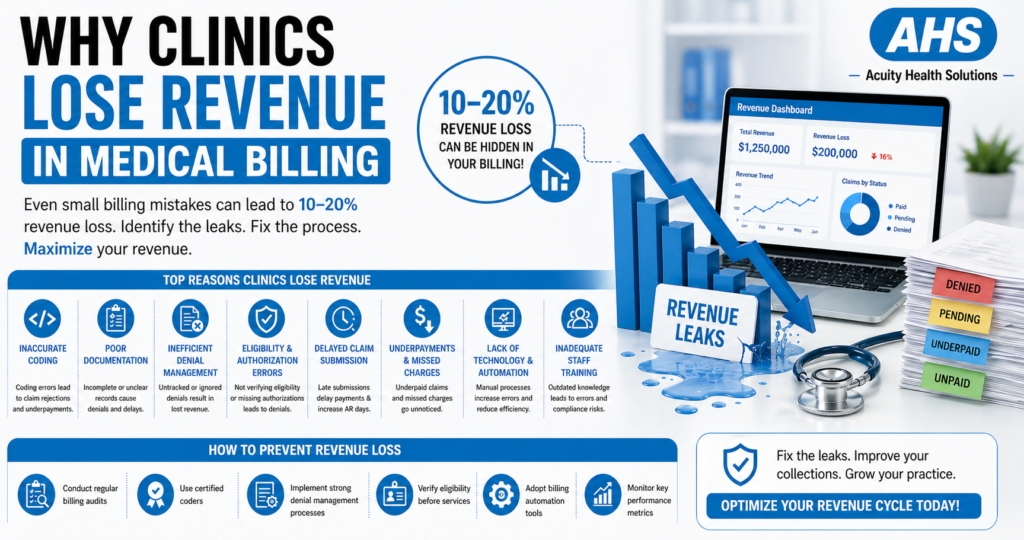
Delayed Claim Submission
Submitting claims quickly is vitally important for getting paid. Payer deadlines are not the most important, but there are timeliness standards that cannot be recovered if missed. Delays also affect cash flow and the AR days expand.
An efficient billing workflow helps submit the claims accurately and quickly.
Underpayments and Missed Charges
Of course, the many clinics that are focusing purely on denied claims and ignoring underpayments. Discrepancies in what insurance companies pay/what is expected to be paid go unnoticed without the right safeguards.
Also, unpaid bills, services that were rendered but not charged for, may drastically impact gross revenues.
Lack of Technology and Automation
Manual systems are error-prone and inefficient. Clinics cannot identify and fix issues without the benefit of modern tools like automated claim scrubbing, real-time reporting, and analytics.
The billing system is powered by technology — when it works, errors are diminished and overall performance goes up.
Inadequate Staff Training
Payer criteria and billing regulations are subject to frequent changes. Without this constant training, in-house staff may have difficulty catching up which result in more errors and compliance risks.
Hiring professionals in-house or outsourcing the task to specialists enables you to keep up with a high level of accuracy.
How to Prevent Revenue Loss
Clinics should aim to curb revenue loss by:
- Conduct regular billing audits
- Use certified coders
- Implement strong denial management processes
- Verify eligibility before services
- Adopt billing automation tools
- Monitor key performance metrics
Conclusion
Medical billing revenue loss is not always easy to recognize but it can be avoided. There are several causes of financial inefficiencies, ranging from errors in coding to poor follow-ups. Clarity on these gap areas will not only help clinics to enforce structured, compliant processes but can add significant value in streamlining their overall revenue cycle.
A streamlined and optimized billing system goes a long way in treasure massive denials reduction and getting faster reimbursements, that also with sustaining growth. When done correctly, this magic can accomplish an effective bill pay in your favor with minimal effort.