Oculoplastic Billing is considered to be one of the most complicated areas of Medical Billing, particularly in the practice of New Jersey. As the payer complexity, strict documentation requirements and increased pressure to reimburse are increasing, there are higher claim denial rates in clinics than before.
Combining ophthalmology, reconstructive surgery, and cosmetic procedures, oculoplastic services include various billing regulations. This overlap causes confusion in the area of coverage, coding, and reimbursement. Practices without special assistance, such as Oculoplastic Medical Billing Services, run the risk of delays and loss of revenue.
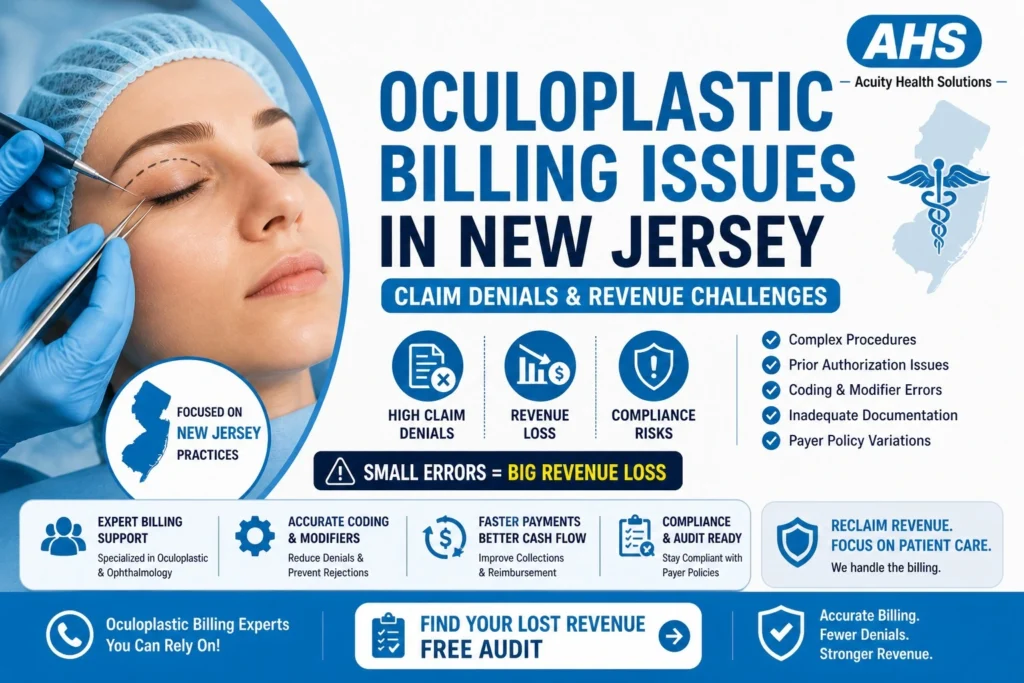
Most Common Oculoplastic Billing Issues Affecting NJ Practices
Some of the common billing issues in New Jersey include:
- Complicated insurance check procedures
- Delays in previous approvals of authorization
- Misunderstanding between cosmetic and medically necessary procedures
- Modifier-related claim errors
- Incomplete or inadequate documentation
- Payer-specific policy variations
These problems are manifested in delays in reimbursement, more denials, and fewer collections, which directly affect the cash flow.
Prior Authorization Issues in Oculoplastic Billing
Beforehand authorization has remained a significant bottleneck. Such procedures as Botox and Xeomin injections or reconstructive surgeries may demand a lot of documentation.
Common problems include:
- Delayed approvals
- Lacking medical necessity documentation.
- Payer-specific requirements not met
Why Oculoplastic Claims Get Denied in New Jersey
Oculoplastic billing claim denials are often due to:
- Incorrect modifier usage
- Absence of documentation of medical necessity.
- Bundling errors
- Diagnosis-code mismatches
- Authorisation-related issues
The patterns of denial differ in Medicare, commercial insurers and managed care plans. Practices can hardly sustain a steady revenue stream without proactive measures aimed at lowering the number of claims denied.
How Billing Issues Impact Oculoplastic Practice Revenue
Billing inefficiencies have a direct impact on financial performance.
Common impacts include:
- Delayed reimbursements
- Underpayments
- Increased accounts receivable (AR) days
- Higher administrative workload
Even a 10-15% dip in revenue has a significant impact on long-term profitability.
Challenges from Payers and Insurers in New Jersey
There are a few billing complexities specific to New Jersey due to:
- Regional payer variations
- Medicaid-specific rules
- Stern commercial insurance documentation procedures.
- Regular policy changes and audits.
Billing operations have become more challenging and prone to errors, with practices having to navigate multiple payer guidelines and ensure compliance.
Advantages of Outsourced Oculoplastic Billing Services
Billing Outsourcing can really enhance performance in oculoplastic practices:
- Availability of expert billing skills.
- Quick and cleaner submissions of claims.
- Powerful rejection management systems.
- Better reimbursement tracking.
- Reduced administrative burden.
- Improved collections.
Collaboration with a reputable outsourced medical billing service or a Medical Billing Company USA will assist practices to concentrate on patient care, and enhance the revenue returns.
How New Jersey Practices Can Improve Billing Performance
In order to minimize the denials and enhance efficiency, practices ought to:
- Strengthen clinical documentation
- Regularly review payer policies
- Track and analyze denials
- Conduct coding audits
- Implement automation tools
- Take advantage of speciality-specific billing assistance
Have questions about Coping with Oculoplastic Billing in New Jersey?
Learn how your revenue cycle can be streamlined with specialized billing support to reduce denials, improve collections, and streamline your Revenue Cycle Mangement.