
To healthcare providers, the issues of the revenue cycle may seem to begin at the claim submission or claim denial management. In practice, a great number of collection problems begin long before this at the beginning of the revenue cycle. The initial operational touchpoint is patient intake, and any slight mistake during this step may result in denials, late payments, underpayment, and revenue loss. Front-end optimization of the revenue cycle is a mandatory concept for practices that strive to enhance the cash flow.
What Is Front-End Revenue Cycle Management?
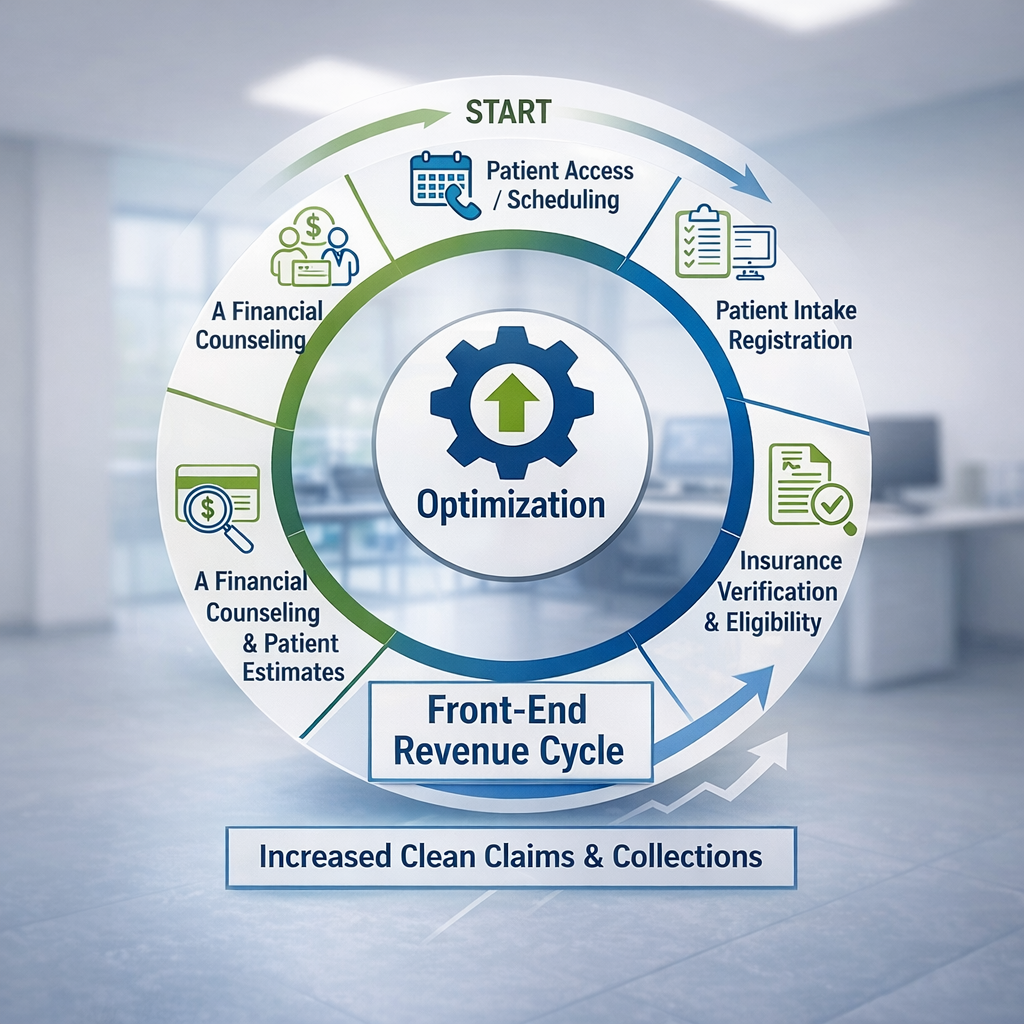
Front-end Revenue Cycle Management entails all activities that transpire prior to a patient being attended to, which include patient registration, demographic information entry, insurance validation, eligibility, authorization administration, and financial advice. These procedures define the nature of a claim as clean before it is ever submitted to a payer.
Properly implemented front-end workflows decrease the amount of rework at the downstream, raise the rate of first-pass claim acceptance, and decrease accounts receivable periods. When managed inadequately, they cause mistakes that are very expensive and hard to remedy in the future.
Common Patient Intake Errors That Impact Collections
The most common and avoidable ones are patient intake errors that lead to revenue leakage. The common problems include incorrect patient demographics, outdated insurance data, missing policy numbers, and incorrect subscriber details. Even the minor mismatches, like a misspelled name or an incorrect date of birth, may lead to dismissal of the claim.
Another significant issue is eligibility-related mistakes. The notices on active coverage, plan type or benefits limitations may result in non-covered service denials. Equally, zero payment is common with the missed or erroneous previous authorizations, despite the commonness of the medical necessity of the services.
There are also gaps in financial intake that have an impact on collections. When patient responsibility is not projected appropriately at check-in, the practices have bad debt, late payment, and huge patient balances.
How Front-End Errors Affect the Entire Revenue Cycle
Mistakes introduced at the intake stage can hardly remain unnoticed. There is an inaccurate flow of information in charge capture, coding, and submission of claims that end up raising denial rates and reworks. The time spent by the staff is then redirected in attempting to rectify unnecessary mistakes rather than address more capable tasks such as denial prevention and revenue analysis.
In a monetary sense, mistakes at the front end push up the number of days in accounts payable, interfere with the predictability of cash flows, and inflate operating expenses. In the long run, they also affect patient satisfaction, because the eroded trust due to the occurrence of billing errors and unpleasant surprises with the balance.
Optimizing Front-End Processes for Better Collections
The first stage in the proper front-end revenue cycle optimization is the standardization of intake processes. This involves regular data collection procedures, real-time eligibility checks, and payer-authorization checks. It is important to train front-desk and intake staff as they are the one who determines the accuracy of data and patient financial transparency.
The aspect of technology is also imperative. Integrated practice management systems, automated eligibility systems, and payer rule engines assist in identifying mistakes before claims are released. Nonetheless, technology is a necessary factor. Intake and denial trend analysis and the continuous process improvement require regular audits of the intake data as a key to maintaining performance.
Another factor is clear communication with patients. Offering initial cost estimates and clarification of coverage restrictions enhances point of service collections and minimizes billing disputes paid downstream.
The Strategic Value of Front-End Optimization
At Acuity Health Solutions, front-end optimization is a control mechanism that helps in achieving a better revenue cycle over the entire organization. With this approach, the providers can minimize the denial rate, increase the speed of payment, and establish a more predictable stream of revenue.
Financial and effective collections cannot be achieved with aggressive follow-ups only. These are developed on the precision of data, adhering to workflows, and disciplined front-end performance. One of the most effective actions that can be implemented by a healthcare organization is optimizing patient intake, which allows safeguarding revenue, enhancing efficiency, and core financial gains.