
Accuracy in Ophthalmology Billing has never been out of the question- but in 2026, it is more important than ever before. Annual updates to CPT and ICD-10, changing payer policies, and increasing documentation demands all increase the chances of lost claims, underpayment, or audit risk due to even minor coding errors.
When it comes to eye clinics and specialty practices, issues of keeping up with changes in coding are not only a matter of compliance, but have a direct revenue effect as well.
This is what ophthalmology providers should be aware of so as to bill correctly in 2026.
Annual CPT & ICD-10 Updates Always Make the Greatest Changes
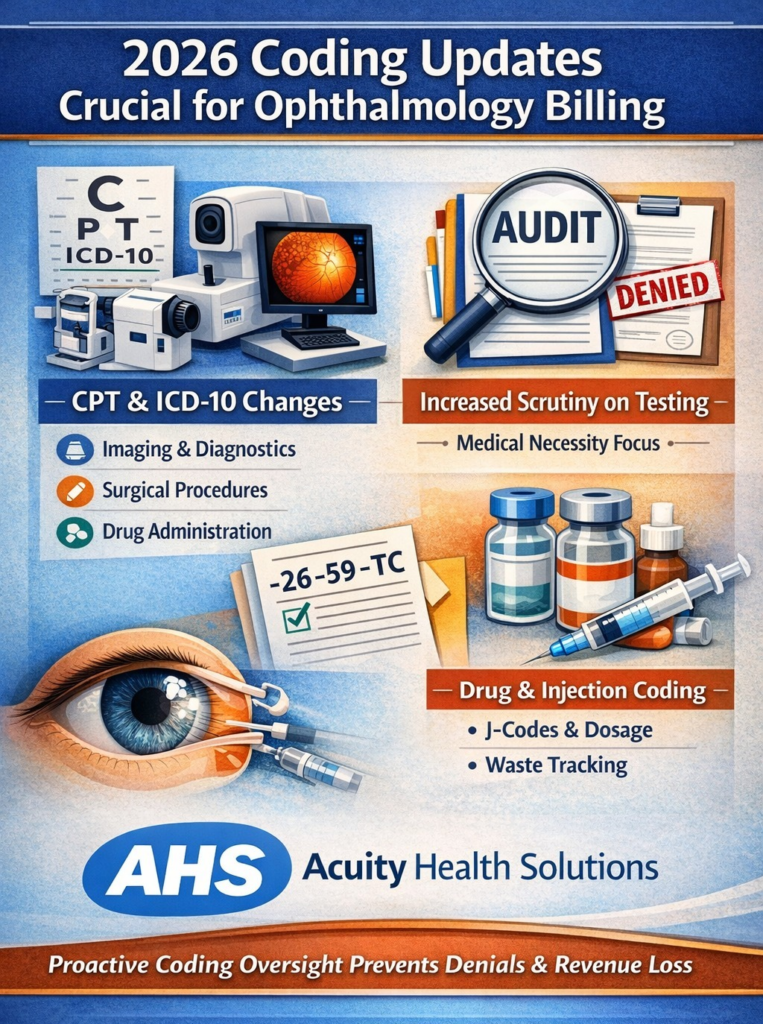
CPT codes are published at the beginning of each year, and ICD-10 diagnosis codes are published at the beginning of each October, as before. These updates often affect:
- Diagnostic imaging (OCT, fundus photography, visual fields)
- Surgical procedures such as cataract extraction
- Injection and drug-administration services
- Laterality and disease-specific diagnosis codes
Documentation expectations usually shift even in situations where the procedure code remains the same. Diagnosis specificity, right vs left eye, progression, and stage of disease are some of the areas of increasing reliance of payers in medical necessity.
Unless clinical notes make the diagnosis code chosen evident, claims can be submitted and either underpaid or not submitted at all.
Increased Scrutiny on Diagnostic Testing
The payers still increase utilization controls of high-volume ophthalmic diagnosticss such as in 2026.
- Optical Coherence Tomography (OCT)
- Visual field testing
- Fundus imaging
The issue of medical necessity is a more serious matter than ever. The practices shall screen on:
- Why the test was ordered
- What condition is being monitored
- How results influence treatment decisions
There is no longer a need to use generic chart notes like the routine follow-up. Reimbursement must be developed with a detailed clinical justification.
Modifier Accuracy Is a Growing Risk Area
The misuse of the modifiers is still among the most frequent denial reasons in billing ophthalmology.
Common issues include:
- Inappropriate use of -26 or -TC in the diagnostic services.
- Misuse of -59 in situations when two or more procedures are carried out on the same day.
- Losing modifiers of bilateral or repetitive services.
Automated payer edits are more violent in the year 2026. When the rules that should be strictly followed in documentation are not followed, there is a chance of services being re-bundled or minimized without clarification.
This causes the accuracy of front-end code to be highly important- it is much harder to fix the error of the modifiers once the payment has been received.
Drug & Injection Coding Requires Extra Attention
Eye clinics still have ample revenue in the retinal injections and biologic therapies, and consequently expose themselves to serious auditors.
Key areas to watch:
- Accurate J-code selection
- Proper unit reporting with regard to the dose given.
- Record keeping of waste where necessary.
- Consistency in clinical documentation and the billed quantity of drugs.
The slightest variation in dose and billed units can cause incomplete payments or recupers many months within the billing period.
Cataract Surgery Documentation Standards Are Tightening
Cataract procedures remain heavily reviewed for medical necessity. In 2026, payers increasingly expect documentation showing:
- Functional vision impairment
- Impact on daily activities
- Preoperative testing results
- Clear surgical rationale
There must be supporting clinical evidence in the medical record, and not just coding.
Why Proactive Coding Oversight Matters
Most ophthalmology denied cases do not look like an unquestionable refusal. Instead, they surface as:
- Reduced reimbursements
- Bundled services
- Delayed payments
- Silent write-offs
These revenue leaks are not usually detected without coding audits and payer trend analysis, which are part of routine activities.
How Acuity Health Solutions Supports Ophthalmology Practices
Acuity Health Solutions assists eye clinics to manage the changes in 2026 and mid the codes by specialty-specific coding supervision, payer-based workflow, and strategic prevention of denials.
Instead of responding once the revenue is lost, Acuity is interested in:
- Maintaining coding in line with the yearly CPT and ICD-10 updates.
- Payers-documentation results of diagnostic tests ensured.
- Follow-up of the usage of modifiers and the accuracy of bills in regard to drugs.
- Determining the denial trends prior to their effects on cash flow.
This strategy assists the practices in ophthalmology to remain compliant and also prevent reimbursement.
Final Thoughts
The future of Ophthalmology billing requires not just simple knowledge of coding. The new requirements have turned success into detailed paperwork, proper use of modifiers, precise drug reporting, and the ability to always be aware of payer expectations.
Proactive practices, as opposed to reactive ones, will be best positioned in minimizing denials, enhancing collections, and providing care, which will not adversely affect its funds.