How Acuity Health Solutions Improved Prior Authorization and Oculoplastic Revenue Tracking for an Austin-Based Plastic & Reconstructive Surgery Clinic
Case Study: Specialty RCM Support for Plastic Surgery, Reconstructive Surgery, Oculoplastics & Ophthalmology
Overview
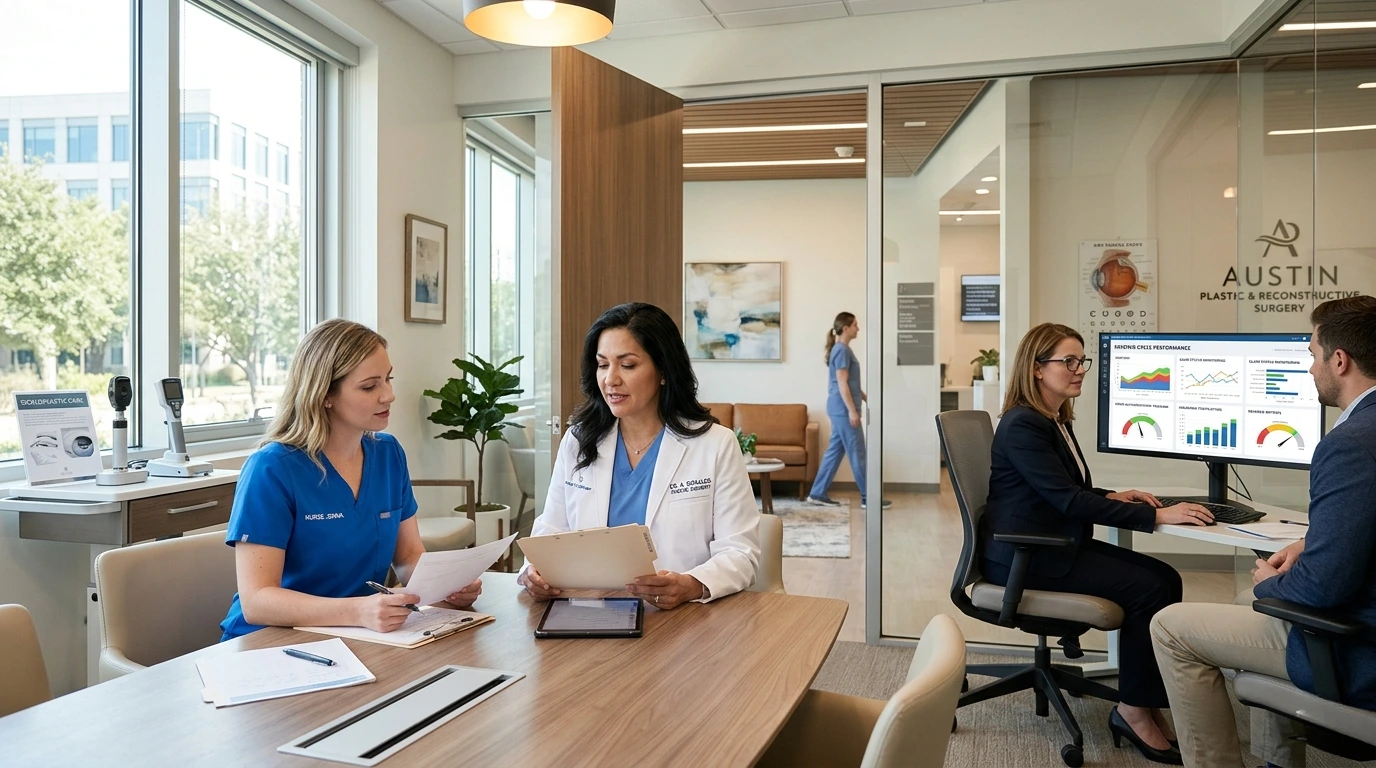
An Austin-based plastic and reconstructive surgery clinic partnered with Acuity Health Solutions after identifying revenue inconsistencies across its specialty service lines.
The clinic offered a wide range of services, including plastic surgery, reconstructive surgery, oculoplastic procedures, Ophthalmology-Related Care, breast reconstruction-related cases, and non-surgical treatments. While the practice had strong clinical expertise and steady patient demand, leadership felt that certain departments were not reflecting their full revenue potential.
The biggest concern was around two areas:
- Prior authorization issues across specialty procedures
- Lower-than-expected revenue performance from the oculoplastic and ophthalmology-related department
The practice needed more than routine billing support. They needed a specialty RCM partner who could review historical patterns, identify operational leakage, and build a more trackable workflow around prior authorizations, eligibility verification, documentation, and claim readiness.
Acuity Health Solutions stepped in to bring structure, visibility, and accountability to the process.
The Situation Before Acuity Health Solutions
Before Acuity Health Solutions involvement, the clinic was dealing with avoidable revenue leakage caused by front-end process gaps.
The leadership team had a strong sense that something was off. The oculoplastic and ophthalmology-related department was seeing patients and performing procedures, but the numbers did not fully align with the expected output.
At the same time, prior authorization issues were affecting multiple specialty offerings across the practice. In a surgical environment, this can create major downstream problems.
A missed authorization, incomplete eligibility check, or delayed payer follow-up can lead to:
Delayed procedures
Denied claims
Rework for staff
Confusion around patient responsibility
Increased A/R
Lower collection predictability
Frustration for providers and administrators
For a plastic and reconstructive surgery clinic, this is especially important because many procedures sit between cosmetic, functional, reconstructive, and medically necessary care. That makes payer requirements more complex and documentation more important.
Step 1: Acuity Health Solutions Reviewed Historical Patterns
The first step was not to immediately change the workflow.
Acuity Health Solutions started by reviewing the clinic’s previous billing and authorization patterns to understand where the leakage was happening.
The review focused on:
- Prior authorization history
- Eligibility and benefits verification patterns
- Oculoplastic and ophthalmology-related claims
- Denials and avoidable rejections
- Payer response timelines
- Authorization follow-up gaps
- Procedure categories with weaker collections
- Documentation gaps before claim submission
- Cases where approval status was unclear before the date of service
This helped Acuity Health Solutions identify that the issue was not simply low volume or weak provider performance.
The core issue was workflow visibility.
The practice did not have a fully centralized way to track every authorization-dependent case from intake to approval to billing. This made it difficult to know which cases were clean, which were pending, and which were at risk before the procedure was performed.
Step 2: Acuity Health Solutions Identified the Main Revenue Leakage Points
After reviewing the patterns, Acuity Health Solutions identified several areas where revenue leakage was occurring.
1. Prior Authorization Tracking Was Not Centralized
Cases were being worked, but the status was not always visible in one place.
This meant the team did not always have a clear view of:
- Which cases were pending
- Which cases were approved
- Which cases required more clinical documentation
- Which cases had payer delays
- Which cases needed escalation
- Which cases were approaching the date of service without full confirmation
2. Eligibility and Benefits Needed More Structure
Eligibility checks were happening, but the process needed to be more consistent across procedure types and payers.
Acuity Health Solutions helped strengthen the verification workflow around:
- Active coverage
- In-network or out-of-network status
- Authorization requirements
- Procedure-level benefits
- Deductibles and patient responsibility
- Payer-specific medical necessity requirements
3. Oculoplastic Revenue Needed Deeper Review
The clinic believed the oculoplastic and ophthalmology department was underperforming.
Acuity Health Solutions reviewed the department separately instead of treating it as part of the broader billing workflow.
This helped identify:
- Procedure categories that needed closer authorization review
- Cases affected by medical necessity requirements
- Payers with more frequent documentation requests
- Claims that required stronger diagnosis and procedure alignment
- Follow-up delays that affected collections
- Areas where the team needed better reporting visibility
4. Reconstructive Surgery Cases Needed Better Pre-Service Controls
For selected reconstructive surgery workflows, including breast reconstruction-related cases, Acuity Health Solutions helped improve the pre-service process.
These cases often carry higher operational risk because they may involve:
- Detailed payer requirements
- Medical necessity review
- Multiple procedure components
- Surgical planning dependencies
- Documentation-sensitive approvals
- Higher-value claim exposure
goal was to reduce avoidable issues before the claim reached billing.
Step 3: Acuity Health Solutions Built a Specialty Prior Authorization Workflow
Once the leakage points were identified, Acuity Health Solutions built a more structured prior authorization workflow for the clinic.
The new workflow was designed to make every case more trackable from start to finish.
The New Workflow Included:
- Patient and procedure identification
- Eligibility and benefits verification
- Payer-specific authorization requirement check
- Documentation request and review
- Prior authorization submission
- Payer follow-up and status tracking
- Approval documentation
- Pre-service confirmation before the procedure
- Claim readiness review
- Post-submission tracking and denial follow-up, if needed
This gave the clinic a clearer process and reduced dependency on scattered notes, memory-based follow-up, or last-minute payer checks.
Step 4: Acuity Health Solutions Created a Centralized Tracking System
Acuity Health Solutions then helped the clinic move toward a more centralized tracking model.
Every authorization-sensitive case could now be monitored by:
- Patient name
- Payer
- Provider
- Procedure
- Date of service
- Authorization requirement
- Submission date
- Pending status
- Approval status
- Reference number
- Effective dates
- Missing documentation
- Follow-up date
- Escalation notes
- Billing readiness
This gave the practice a much clearer operational view.
Instead of asking, “Do we know if this case is approved?” the team could quickly see where each case stood.
Step 5: Acuity Health Solutions Improved Oculoplastic and Ophthalmology Revenue Visibility
For the oculoplastic and ophthalmology-related department, Acuity Health Solutions created a more focused review process.
The team looked at previous patterns and helped the clinic understand which issues were affecting revenue performance.
The improvement process included:
- Reviewing historical denial and payment behavior
- Identifying payer-specific authorization issues
- Flagging procedure categories needing documentation support
- Tracking claims by status and payer response
- Monitoring unresolved A/R
- Reviewing underperforming procedure groups
- Creating better visibility into pending and delayed cases
This helped the clinic move away from guesswork.
The department’s performance could now be reviewed with clearer data, better tracking, and more actionable follow-up.
Step 6: Acuity Health Solutions Strengthened Reconstructive Surgery Claim Readiness
Acuity Health Solutions also supported select reconstructive surgery workflows, including breast reconstruction-related cases where authorization, eligibility, and documentation can significantly impact reimbursement.
The focus was on improving claim readiness before the procedure was performed.
This included:
- Confirming active coverage before service
- Checking whether authorization was required
- Reviewing payer-specific requirements
- Tracking approvals and effective dates
- Confirming documentation availability
- Flagging incomplete or unclear cases early
- Supporting billing handoff after the procedure
This gave the clinic stronger control over complex surgical cases and reduced avoidable uncertainty.
What Changed Operationally
Acuity Health Solutions work helped the practice shift from a reactive process to a proactive revenue protection model.
Before Acuity Health Solutions
The clinic had:
- Prior authorization gaps across specialty services
- Limited visibility into pending and approved cases
- Inconsistent tracking of payer follow-ups
- Oculoplastic revenue that appeared lower than expected
- Reconstructive surgery cases that needed tighter pre-service review
- More staff time spent chasing payer updates
- More uncertainty around claim readiness
After Acuity Health Solutions
The clinic gained:
- A centralized prior authorization tracking workflow
- More consistent eligibility and benefits verification
- Better pre-service visibility for surgical cases
- Improved tracking for oculoplastic and ophthalmology-related revenue
- Stronger documentation follow-up
- More disciplined payer communication
- Clearer reporting for pending, approved, delayed, and at-risk cases
- Reduced administrative pressure on the internal team
Impact Snapshot
Acuity Health Solutions helped the clinic improve the operational foundation of its Revenue Cycle without exposing confidential revenue numbers.
Key Improvements Delivered
Practical Results for the Practice
The impact was not just in billing. It improved the way the clinic operated.
1. Better Control Before the Date of Service
The team had better visibility into whether a case was ready before the patient arrived for the procedure.
This helped reduce last-minute confusion around authorization, coverage, and payer requirements.
2. Fewer Untracked Authorization Issues
By moving cases into a centralized tracker, the practice reduced the risk of cases being missed, delayed, or worked without clear ownership.
3. Stronger Oculoplastic Revenue Review
The oculoplastic and ophthalmology-related department became easier to monitor because Acuity Health Solutions separated the department’s revenue cycle patterns and reviewed them with more detail.
4. Better Communication Between Teams
Scheduling, clinical documentation, authorization, and billing workflows became more connected.
This helped reduce back-and-forth and improved accountability.
5. More Predictable Revenue Operations
The practice gained a more reliable way to understand which cases were ready, which needed follow-up, and which required escalation.
Why This Matters for Plastic and Reconstructive Surgery Practices
Plastic and reconstructive surgery billing is complex because not every procedure follows the same payer path.
Some procedures are cosmetic. Some are medically necessary. Some require strong documentation. Some need prior authorization. Some depend heavily on diagnosis alignment, functional impairment, photos, operative notes, or payer-specific policy criteria.
For an Austin-based plastic and reconstructive surgery clinic, even a small gap in authorization or documentation can create a major downstream issue.
Acuity Health Solutions helps practices reduce that risk by building stronger front-end and back-end revenue cycle workflows.
The goal is not just to submit claims.
The goal is to protect revenue before it is lost.
The Acuity Health Solutions Difference
Acuity Health Solutions brought specialty-specific RCM support to a clinic where standard billing processes were not enough.
Our team understood the importance of:
Prior authorization discipline
Eligibility and benefits verification
Oculoplastic and ophthalmology billing review
Reconstructive surgery claim readiness
Payer-specific documentation tracking
Surgical case visibility
Denial prevention
A/R follow-up
Revenue cycle reporting
By improving these areas, Acuity Health Solutions helped the clinic build a more trackable, predictable, and scalable revenue cycle process.
Final Outcome

The clinic gained better control over prior authorizations, eligibility verification, oculoplastic revenue tracking, and reconstructive surgery claim readiness.
Acuity Health Solutions helped the practice move from scattered follow-up and unclear visibility to a more structured operating model.
The result was a cleaner, more accountable revenue cycle process that supported both the administrative team and the providers.
Most importantly, the clinic gained confidence that its specialty procedures were being reviewed, tracked, and followed up with the level of detail they required.
Need Help With Prior Authorization or Surgical RCM?
If your Plastic Surgery, reconstructive surgery, oculoplastic, or ophthalmology practice is facing prior authorization delays, claim denials, eligibility issues, or unclear revenue performance, Acuity Health Solutions can help.
We support specialty practices with:
Prior authorization
Eligibility and benefits verification
Claim submission
Denial management
A/R follow-up
Payment posting
Patient billing support
Revenue cycle reporting
Acuity Health Solutions helps specialty practices turn complex billing into clear, trackable, and predictable revenue operations.
Want to Reduce Revenue Leakage and Improve Your Plastic Surgery Billing Process
From prior authorization management to claims optimization and A/R recovery, Acuity Health Solutions helps specialty practices create a cleaner, more efficient revenue cycle.